The roar of the crowd, the click of the mouse, the tension in the air – it's all building up for VCT Masters Madrid! If you're a Valorant enthusiast eagerly awaiting the first international LAN event of the 2024 VCT season, then understanding the VCT Madrid schedule is crucial to catching all the action. So, when does the competition kick off, and which teams will battle it out for the coveted championship points?
At a Glance: VCT Masters Madrid
- Dates: March 14 - March 24, 2024
- Location: Madrid Arena, Madrid, Spain
- Format: Swiss Stage followed by Double-Elimination Playoffs
- Teams: 8 teams (top 2 from each international league's kickoff tournament)
- Prize Pool: $500,000 USD + VCT Points
- Broadcast: Twitch and YouTube (Valorant Esports channels)
What Makes Masters Madrid So Important?
VCT Masters Madrid isn't just another tournament; it's a pivotal stepping stone on the road to Valorant Champions. Winning grants a team automatic entry into the Champions playoffs. Beyond that, every victory bags crucial Championship Points, determining which teams ultimately qualify for the Valorant World Championship at the end of the year. It's a high-stakes showdown where regional pride and championship dreams collide.
VCT Madrid Schedule: Breaking Down the Dates
The competition unfolds across two thrilling stages: the Swiss Stage and the Playoffs. Let's break down the schedule to make sure you don't miss a moment.
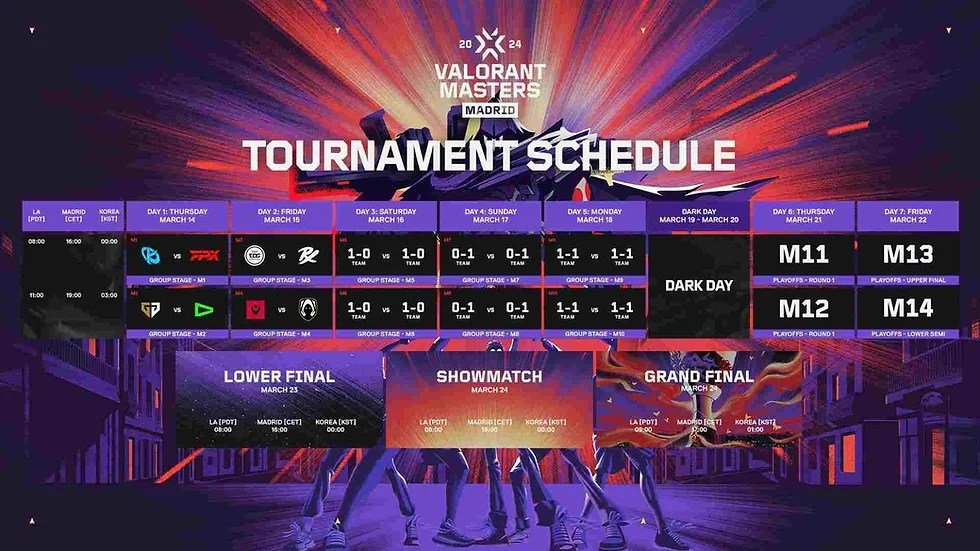
The Swiss Stage: March 14 - March 18
The Swiss Stage is where the initial eight teams are whittled down to the top four. Here's the daily rundown. All times are listed in Central European Time (CET). Remember to adjust for your local timezone!
- March 14:
- FunPlus Phoenix vs. TBD - 16:00 CET
- Gen.G vs. LOUD - 19:00 CET
- March 15:
- EDward Gaming vs. Paper Rex - 16:00 CET
- Sentinels vs. Team Heretics - 19:00 CET
- March 16: Swiss Stage Round 2 - 16:00 CET and 19:00 CET
- March 17: Swiss Stage Round 2 - 16:00 CET and 19:00 CET
- March 18: Swiss Stage Round 3 - 16:00 CET and 19:00 CET
Understanding the Swiss System Format
The Swiss Stage uses a special format. Unlike a typical group stage, teams aren't pre-assigned to groups. Instead:
- Initial Matchups: Regional Kickoff winners face off against runner-ups from different regions. This prevents early clashes between teams from the same league.
- Win-Loss Progression: Teams that win their first match advance to the "winners' matches," while losing teams go to the "elimination matches."
- Random Draws: Subsequent rounds involve random draws between winners' and elimination matches. This means teams from the same region can end up playing each other later in the Swiss Stage.
- Advancement Criteria: To progress, teams must secure two match wins before accumulating two losses. This is where the best-of-three format matters.
The Playoffs: March 21 - March 24
The top four teams emerging from the Swiss Stage enter a double-elimination bracket. This stage is sudden-death territory – one loss, and you're fighting to survive in the lower bracket. The Grand Final is the ultimate showdown, deciding the champion of Masters Madrid.
- March 21: Upper Bracket Semi-Finals - 16:00 CET and 19:00 CET
- March 22: Lower Bracket Semi-Final - 16:00 CET; Upper Bracket Final - 19:00 CET
- March 23: Lower Bracket Final - 16:00 CET
- March 24: Grand Final - 17:00 CET
Playoffs Match Format
All matches in the Playoffs are best-of-three (Bo3), except for the Lower Bracket Final and the Grand Final, which are best-of-five (Bo5). This means the tension will be at an all-time high, with teams pulling out all the stops to secure those crucial map wins.
Which Teams Are Competing?
Masters Madrid brings together the top talent from around the globe: two teams from each of the four international leagues (Americas, EMEA, Pacific, and China). These teams earned their spots by dominating their regional Kickoff tournaments. The competition promises to be fierce, with familiar powerhouses and rising stars all vying for the crown.
How to Watch: Streams and Tickets
For those of us following from home, Masters Madrid will be streamed live on Twitch and YouTube via the official Valorant Esports channels. Broadcasts are generally scheduled to begin around 4 PM GMT, but check the official channels for specific start times each day.
If you're lucky enough to be in Madrid, you might even be able to experience the event live! Tickets went on sale earlier in the year through Ticketmaster. Prices for the Swiss Stages were generally more affordable than those for the Playoffs, reflecting the increased intensity as the tournament progresses. Keep an eye out for future events if you missed the chance this time!
Why the Swiss Stage Matters: More Than Just Qualifying
The Swiss Stage isn't just about determining the top four teams. It's about momentum, strategic adaptation, and psychological warfare. Teams have to adjust on the fly, study their opponents' tendencies, and refine their strategies based on the outcomes of each match.
Think of it like this: picture a chess tournament where players are paired based on their performance in previous rounds. The Swiss system ensures that strong teams face strong teams, and weaker teams face weaker teams (at least initially). This creates a dynamic playing field where upsets can happen, and underdogs can rise to the occasion.
Common Questions About VCT Madrid
Let's tackle some frequently asked questions to clear up any confusion.
- What are VCT Points? VCT Points are awarded based on a team's performance throughout the Valorant Champions Tour season. These points accumulate and determine which teams qualify for the Valorant World Championship at the end of the year. The higher you place in tournaments like Masters Madrid, the more points you earn.
- What happens if two teams from the same region end up playing each other in the Swiss Stage? This is entirely possible! While the initial matchups are designed to avoid regional clashes, the random draws in later rounds can result in teams from the same region battling it out.
- Why is it called the "Swiss" system? The name comes from its origin in Swiss chess tournaments. It's a widely used tournament format that allows a large number of players or teams to compete without requiring a full round-robin.
- How does the seeding work in the Playoffs? Teams with a 2-0 record from the Swiss Stage will be seeded against teams with a 2-1 record in the first round of the upper bracket. This rewards teams that performed exceptionally well in the Swiss Stage.
- What's the difference between the Upper Bracket and Lower Bracket? Losing a match in the Upper Bracket doesn't eliminate you from the tournament. You drop down to the Lower Bracket and get a second chance to fight your way back to the Grand Final. However, losing a match in the Lower Bracket means you're out of the competition.
Strategies for Following VCT Madrid Like a Pro
Want to elevate your viewing experience? Here are few tips for staying ahead of the game:
- Track Team Compositions: Pay attention to the agents each team selects. Different agents have different strengths and weaknesses, and team compositions can significantly impact the outcome of a match.
- Analyze Map Picks: Teams strategically choose which maps to play based on their strengths and their opponents' weaknesses. Understanding map preferences can give you insights into a team's overall strategy.
- Monitor Key Player Performances: Identify the star players on each team and track their individual performances. A single clutch play can turn the tide of a match.
- Engage with the Community: Join online forums, social media groups, and live stream chats to discuss the matches with other fans. You'll learn new perspectives and enhance your overall experience.
- Stay Updated: Follow the official Valorant Esports channels for the latest news, updates, and schedule changes.
Beyond the Broadcast: Experiencing the VCT Madrid Atmosphere
Even if you can't be there in person, you can still capture some of the excitement of the VCT Madrid experience:
- Host a Watch Party: Gather your friends, order some food, and create a dedicated viewing space.
- Create a Fantasy League: Organize a fantasy league with your friends and compete to see who can predict the winning teams and top performers.
- Designate a "Hype Room": Decorate a room with team flags, posters, and other Valorant-themed decorations.
- Learn the Lingo: Familiarize yourself with common Valorant terms and phrases.
- Follow Players and Teams on Social Media: Get insights and behind-the-scenes content from the players and teams themselves.
Getting Ready for Shanghai: What's Next After Madrid
While Masters Madrid is the first major international event of the year, it's only the beginning. Looking ahead, the VCT season will continue with regional leagues and another Masters tournament in Shanghai, China. The winner of Masters events will have automatic qualifications into the Champions playoffs, and the points earned contribute to qualification for Valorant Champions. Keep an eye on the official Valorant Esports channels for updates on those events.
Thinking about the broader picture Valorant Masters Madrid Schedule is key to understanding the trajectory of the season.
Mastering Your Valorant Viewing Experience
Understanding the VCT Madrid schedule is just the first step. By diving deeper into the teams, strategies, and storylines, you can elevate your viewing experience and become a true Valorant expert. So, grab your popcorn, tune into the streams, and get ready for some unforgettable action!
As you follow the teams, always remember that Masters Madrid is more than just a tournament; it's a celebration of skill, strategy, and the passion of the Valorant community. Enjoy the ride!